
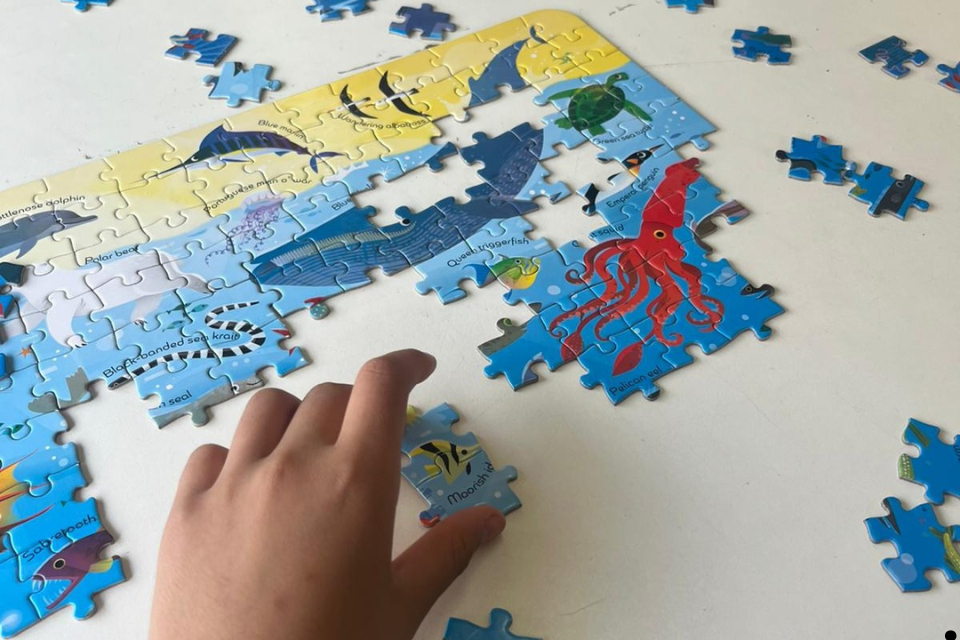
STEM learning might sound like just another education buzzword, but it’s actually something that happens every day — especially when kids are curious, inventive, and hands-on. STEM stands for Science, Technology, Engineering and Mathematics, and it’s all about helping children develop skills that prepare them for life: creativity, problem-solving, teamwork, and critical thinking.
At Head Start OOSH, we see STEM in action constantly — when children design obstacle courses, build with blocks, experiment with slime, or figure out how to make their paper plane fly further. Each of these activities builds confidence, independence and the ability to think through challenges. And the best part? You don’t need a classroom or fancy equipment to nurture STEM skills. With a bit of curiosity and encouragement, you can make your home a fun, hands-on place for learning too.
Why STEM Learning Matters
STEM helps children make sense of the world. It encourages them to ask why things happen, explore how they work, and think of what else might be possible. Here are just a few reasons why STEM learning is so powerful for primary school children:
- Encourages curiosity: Kids learn best when they’re exploring and discovering things for themselves.
- Builds resilience: Trial and error is part of every STEM activity — it teaches children to keep trying when things don’t go to plan.
- Develops problem-solving skills: STEM promotes creative thinking — seeing a problem, testing ideas, and finding solutions.
- Supports real-life learning: Measuring ingredients, building a cubby house, or planting a garden are all examples of practical maths and science in action.
- Boosts confidence: When children experiment, design, and create, they start believing in their ability to learn independently.
STEM is everywhere — in the kitchen, the garden, the garage, and even during playtime. The trick is to recognise and encourage those moments.

1. Encourage Curiosity and Ask Questions Together
The easiest way to spark STEM learning is by asking questions. When your child wonders how something works, instead of giving the answer straight away, try exploring it together. Ask:
- “What do you think will happen if…?”
- “How could we test that?”
- “Why do you think that changed?”
Children learn so much by observing, predicting, and experimenting — whether it’s why the toast lands butter-side down, or what makes a bubble pop. Try this: Drop different objects into a bowl of water to see which ones float or sink. Ask your child to predict what will happen each time.
2. Build and Create Using Everyday Materials
Kids love to build — and that’s STEM in action. Provide them with materials to create something from their imagination. Collect recyclables like cardboard tubes, paper cups, and string, and see what they can make. It could be a tower, a car, a marble run, or even a bridge for their toys. Encourage them to test and improve their creations:
- “What could make it stronger?”
- “Can you make it taller or faster?”
This kind of play strengthens engineering and problem-solving skills while teaching persistence and creativity. Try this: Hold a family “build-off” challenge. Give everyone 10 minutes and the same materials (like straws, tape, and paper). See who can build the tallest tower that stands on its own.
3. Explore Science in the Kitchen
Your kitchen is a mini-laboratory. Cooking involves measuring, observing changes, predicting results, and following steps — all key STEM skills. Invite your child to help with simple recipes and talk through what’s happening:
- “What happens when we mix cold milk with warm cocoa?”
- “Why does the cake rise in the oven?”
- “What happens if we use more or less of one ingredient?”
Cooking teaches children about cause and effect, sequencing, and even fractions and temperature — without feeling like a lesson. Try this: Make your own ice blocks or jelly and talk about how liquids turn into solids as they freeze or cool.
4. Get Outside and Discover Nature
The backyard or local park is full of opportunities for hands-on learning. Observing nature helps children build curiosity and awareness of the world around them. You can:
- Count how many different insects you can find in 10 minutes.
- Observe how shadows change throughout the day.
- Measure how tall a plant grows each week.
- Collect leaves and sort them by size or shape.
Outdoor exploration nurtures the science side of STEM while promoting mindfulness, patience, and care for the environment. Try this: Start a simple veggie or herb garden. Ask your child to predict which plants will grow fastest, record growth in a journal, and take photos each week.
5. Introduce Fun with Technology
Technology doesn’t just mean screens — it’s about understanding how things work and how we can use them to create. Encourage your child to be a creator, not just a consumer.
- Try free kid-friendly coding apps like ScratchJr or Tynker.
- Build simple circuits with a beginner electronics kit.
- Make a stop-motion video using a tablet or phone.
- Explore how machines in your home work — a toaster, a washing machine, or a fan.
Discuss what each part does and how it helps the machine function. Try this: Let your child use an old camera or phone to create a “STEM documentary” about their day. They can record and explain discoveries they make around the house.

Bringing It All Together
Supporting STEM learning at home doesn’t mean structured lessons or extra homework. It’s about giving children time, space, and encouragement to explore their curiosity and creativity. Here are a few final tips:
- Celebrate effort, not just results. Praise problem-solving and persistence — “I love how you kept trying until it worked.”
- Create a ‘maker space’. Set up a small area with everyday materials for building, drawing, and tinkering.
- Ask open-ended questions. Encourage thinking, reasoning, and reflection.
- Model curiosity. Let your child see you wonder, explore, and learn too.
When parents nurture curiosity and hands-on play, children build the confidence to ask questions, test ideas, and see learning as something exciting — not something that only happens at school. At Head Start OOSH, we believe every child is naturally curious. Through play, discovery, and imagination, they’re already becoming tomorrow’s problem-solvers, innovators, and creators — one small experiment at a time.
References
- NSW Department of Education — STEM Education Overview. education.nsw.gov.au
- NSW Department of Education — STEM at Home Resources. education.nsw.gov.au/parents-and-carers/learning/stem
- Little Scientists Australia — STEM in Early and Primary Learning. littlescientists.org.au
- CSIRO Education — STEM Professionals in Schools. csiro.au